

Rifaque Akrami
Software engineer, working as RSX Develops.
I build software that stays understandable as it becomes more capable: local-first AI tools, developer systems and client products.
RSX, as one solid. Its three shadows each spell a letter.
Drag the solid to turn it. It settles back into place.
Projects
Each project in the environment it runs in. Choose one, then explore it.
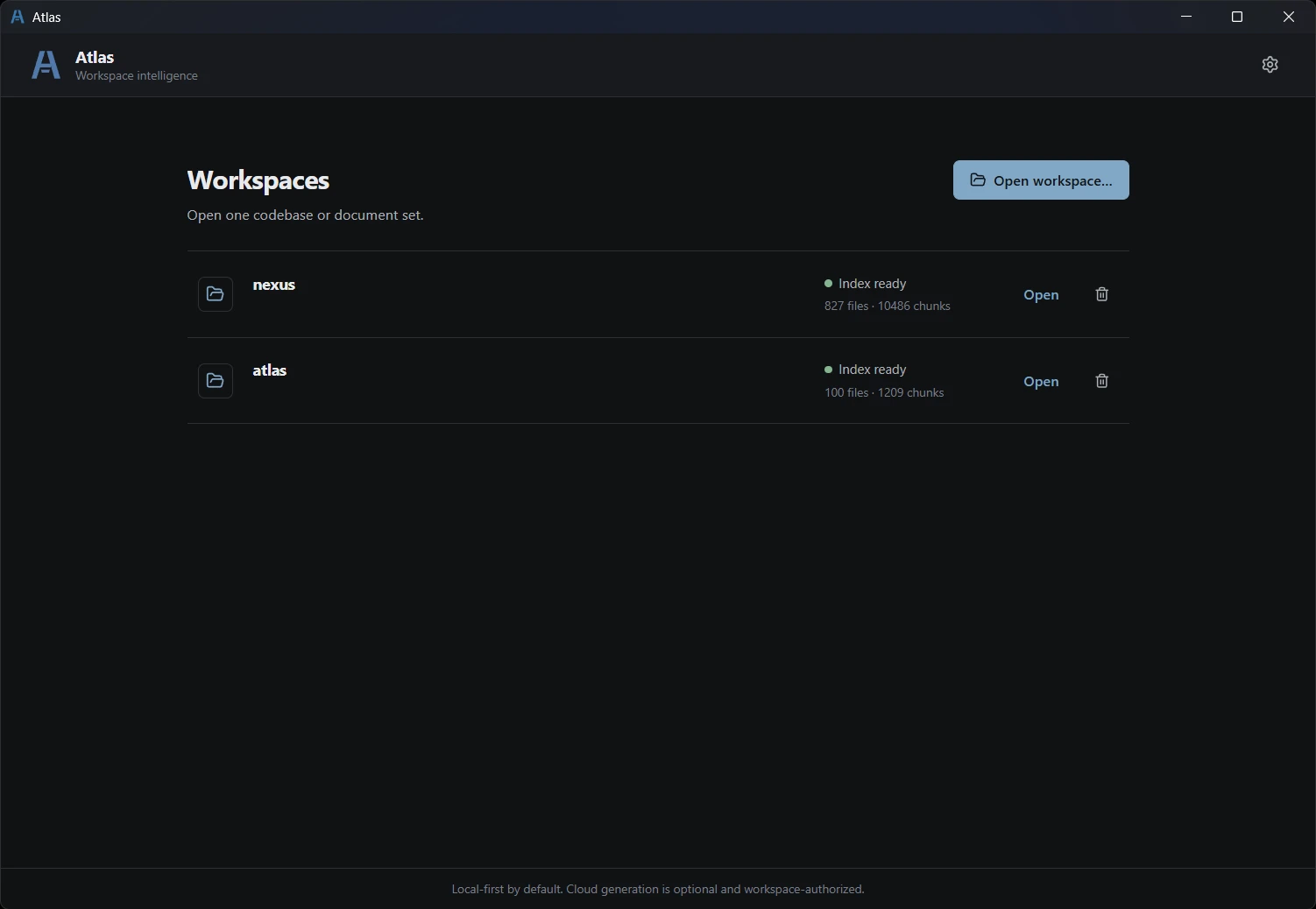
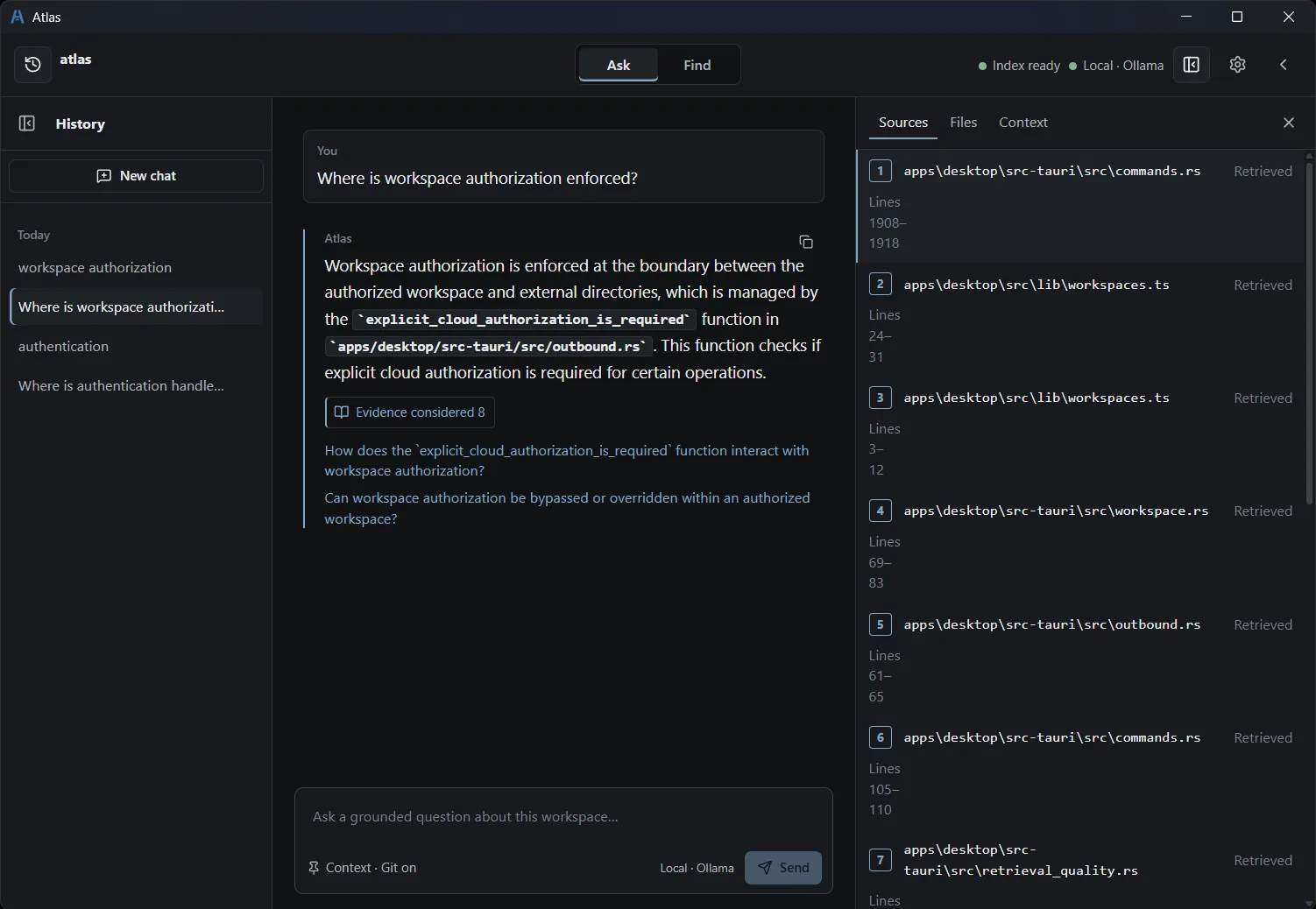
ScreenshotAtlas 1.0, Ask and Workspaces · local paths masked
Local-first workspace intelligence
Atlas
v1.0.3 released · not in active developmentA desktop app that indexes one codebase or document set and answers with evidence you can inspect, or declines when there isn't enough.
My partSole author: Rust backend, retrieval pipeline, interface, release.
Runs on Windows x64
Read the case studyArchive builds
Earlier, smaller and team work, kept short. Each entry is described from its code.
ZeroLink
A small real-time chat app, built in a short burst to learn WebSockets.
A Next.js client and an Express server in TypeScript on the ws library. Firebase ID tokens are checked when a socket connects; users, conversations and messages are stored in MongoDB. Global and direct chats, history on connect, typing indicators, image and video uploads.
Blood Report Disease Diagnosis
An academic Flask app that flags possible blood disorders from nine full-blood-count values. Not a diagnostic or clinical tool.
A scikit-learn random forest trained on a small sample dataset (298 rows), a lookup of possible causes for each result, and SQLite accounts that keep a history of predictions.
Hospital Management System
A desktop app for a clinic's front desk: patients, doctors and appointments.
Python and Tkinter over MySQL: patient registration with appointment booking, doctor records, an admin view of patients, doctors and appointments, and clearing completed appointments.
How I work
I work across the stack, but the parts I keep returning to are backend architecture and retrieval, and one question under both: how software becomes more capable without becoming less understandable or controllable.
Nexus is where that goes furthest: an assistant with a hard boundary between what a model may suggest and what is allowed to happen. Atlas is the released version of the same instinct: index a codebase locally, retrieve well, and decline when the evidence isn't there.
The rest is ordinary product engineering, which matters just as much. Through HubZero, an engineering studio I co-founded, I've delivered paid client software end to end and look after the infrastructure it runs on.
I care about evidence over claims. Most of what I've learned came from being wrong in a way a test suite could not catch.
Capability is not permission.
Nexus and Atlas both draw a hard line between what a model may propose and what the software lets happen. The interesting engineering is usually at that line.
Say what isn't done.
Every project here lists its limits next to its features. A pre-release label is information, not an apology.
Local first, cloud by consent.
Where it is practical, data and inference stay on the user's machine, and anything that leaves does so because someone chose it.
Products, not demos.
Installers, recovery paths, empty states and the servers things run on are part of the work, whether it is a client storefront or a personal tool.
Experience and education
Newest first. Each line is drawn to scale against the same years, so overlaps read straight down the page.
Oct 2026 to now
Reflux, ExtendSpace, Layers by RSX
Personal projects RSX Develops
All three started at the beginning of October 2026.
Sep 2026 to now
BlueTap
Personal project RSX Develops
Started at the end of September 2026. Paused at the pre-Android-17 foundation.
Jun 2026 to now
Feb 2026 to Sep 2026
Aug 2025 to May 2026
Software Engineer Intern
Employment RG SmartDiscovery LLP
Frontend development and API integration for nxNearby's job portal and AI-assisted course and quiz workflows.
Aug 2025 to Jan 2026
QueryCraft
Collaborative project Final-year project, kept as a HubZero Build
Three-person team; primary technical contributor.
Apr 2025 to Sep 2025
Jan 2025 to now
Co-founder & Software Engineer
Co-founder HubZero
Architecture, full-stack implementation and delivery infrastructure for an engineering studio I co-founded. hubzero.in
Dec 2022 to Jun 2026
B.E. Computer Science and Engineering
Education AITM, affiliated with VTU
CGPA 8.36. AWS Cloud Practitioner Essentials training, May 2025.
Bill of materials
Technologies, listed only where a project here used them. Choose one to see where; choose a project to see what it is made of.
Languages
Interfaces
Back end and data
AI and retrieval
Media and devices
Delivery
Choose a technology or a project.
Get in touch
I'm open to software engineering roles, remote or with relocation. Email is the quickest way to reach me.
- rifaque.rs@gmail.com
- Name
- Rifaque Akrami
- Working as
- RSX Develops
- Based in
- Bhatkal, Karnataka, India
- Availability
- Open to relocation and remote roles.
- Elsewhere
- GitHubLinkedInRésumé (PDF)